Record price points across the global shipping network should be treated as a call to action rather than an unavoidable cost of doing business, according to Orkhan Rustamov, chief executive of the Malta-headquartered trading group Alkagesta, writing in an exclusive opinion piece for The Motorship. He argues that the companies responsible for moving essential resources cannot simply absorb higher transport costs and pass the consequences down the chain.
Rustamov points to price data tracked by Argus since 2005, noting that several benchmarks recently broke records for the first time since that service began. Among them he cites transit fees of up to USD 2.5 million to pass through both locks of the Panama Canal, tanker freight rates in the Black Sea and rates for shipping oil from the Gulf to the Far East. Drought conditions in Europe have also pushed Trans-Rhine freight costs to their highest level in 14 years, echoing the disruption mapped in the group's Hormuz blockade fuel oil assessment.
While he acknowledges the on-off conflict around the Strait of Hormuz and the worsening effects of climate as genuine headwinds, the chief executive maintains that treating them as a fait accompli would be a serious error. Neither factor is likely to change soon, he writes, and continuously rising prices risk inviting scrutiny and intervention from governments and international bodies, while damaging the reputation of an industry that positions itself as custodian of essential resources. His own group sets out its remit across trading, shipping and distribution in its what we do overview.
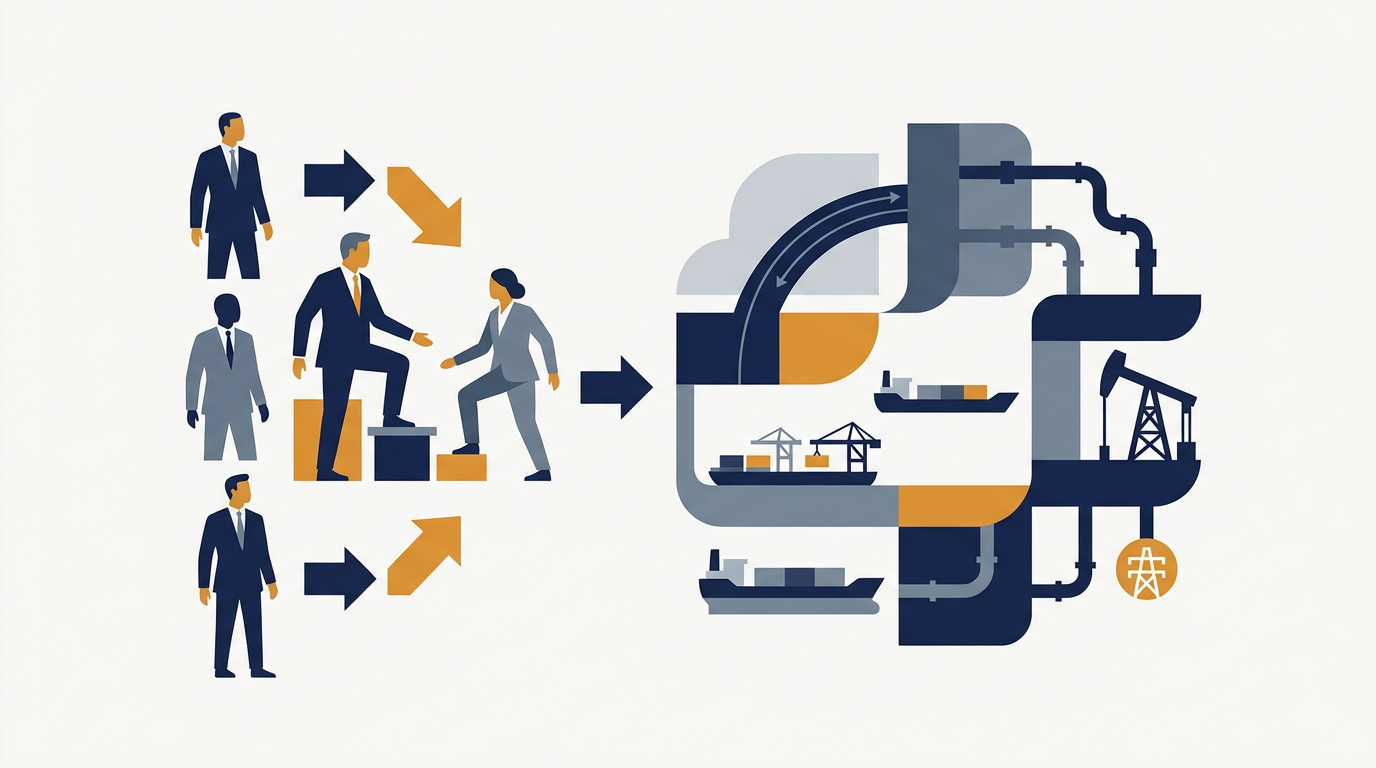
His central recommendation is agility. Shipping companies, he argues, should be embedded with traders to build a physical trading strategy capable of reacting quickly to sudden events, rather than treating vessels, route choice and freight as separate components of a narrow procurement exercise. That combination of a physical trading desk and an in-house shipping and logistics capability mirrors how his own group is structured.
Diversity of supply sources, transport modes and route options should be basic requirements rather than optional extras for every operator, he writes, and close work with traders is where that flexibility is found, given their networks, global reach and speed of decision-making. Related disciplines such as risk management and trade finance sit alongside that trading function in the group's own business model.
Rustamov also calls on the industry to scenario plan and put contingencies in place well before disruption occurs, warning that few parts of the supply chain can be taken for granted. He poses the practical questions of what happens if a refinery or port is unavailable for a month, and whether road transport or pipelines could be substituted, adding that an alternative does not need to be perfect or cheapest, only viable. The group has written separately on operational reliability in trading and on the role of Malta as a global trading hub in keeping those options open.
The industry has become too fixated on the live price, in his assessment, with media, brokers, suppliers and customers all reacting most strongly to immediate market moves. He argues that 2026, much like 2022, has served as a reminder to invest time and resources in the wider supply chain picture, a theme also reflected in the group's September 2026 fuel oil market outlook and its earlier choke-point pressures review.
More than half a year has passed since the Hormuz conflict began, he notes, time enough for boardrooms at shipping companies and trading houses to have started building resilient, diversified supply networks and contingency plans. Failing to do so, he warns, would threaten the industry's standing as custodian of the resources that power the global economy. Further commentary is published on the group's media hub, with background in its company profile and ESG framework.